



Microsoft’s Path Guide: A Simple Approach to Indoor Navigation
Microsoft Research has taken a novel approach to tackle the challenges of indoor navigation with their Path Guide app. Unlike traditional indoor mapping solutions that require expensive infrastructure like beacons, Path Guide leverages the sensors already present in smartphones. The app relies on user-generated “traces,” which are essentially recorded paths through a building. Users can create these traces by simply starting the app at a starting point and walking to their destination. The app then processes this data and provides basic navigation instructions, such as “in 20 steps, take a right.”
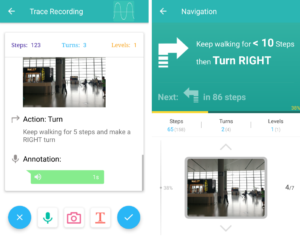
Path Guide doesn’t attempt to create a complete visual representation of the entire building; instead, it focuses on providing clear, concise directions. This approach offers several advantages:
- Accessibility: Path Guide is particularly beneficial for people with impaired vision or those who don’t speak the local language, making it easier to navigate unfamiliar environments.
- Simplicity: The app’s reliance on existing sensors eliminates the need for additional hardware or complex infrastructure.
- Flexibility: Users can create and share traces with others, enabling a collaborative approach to indoor navigation.
While currently in prototype stage and available only on Android, Path Guide demonstrates a promising potential for simplifying indoor navigation, offering a user-friendly and accessible solution.